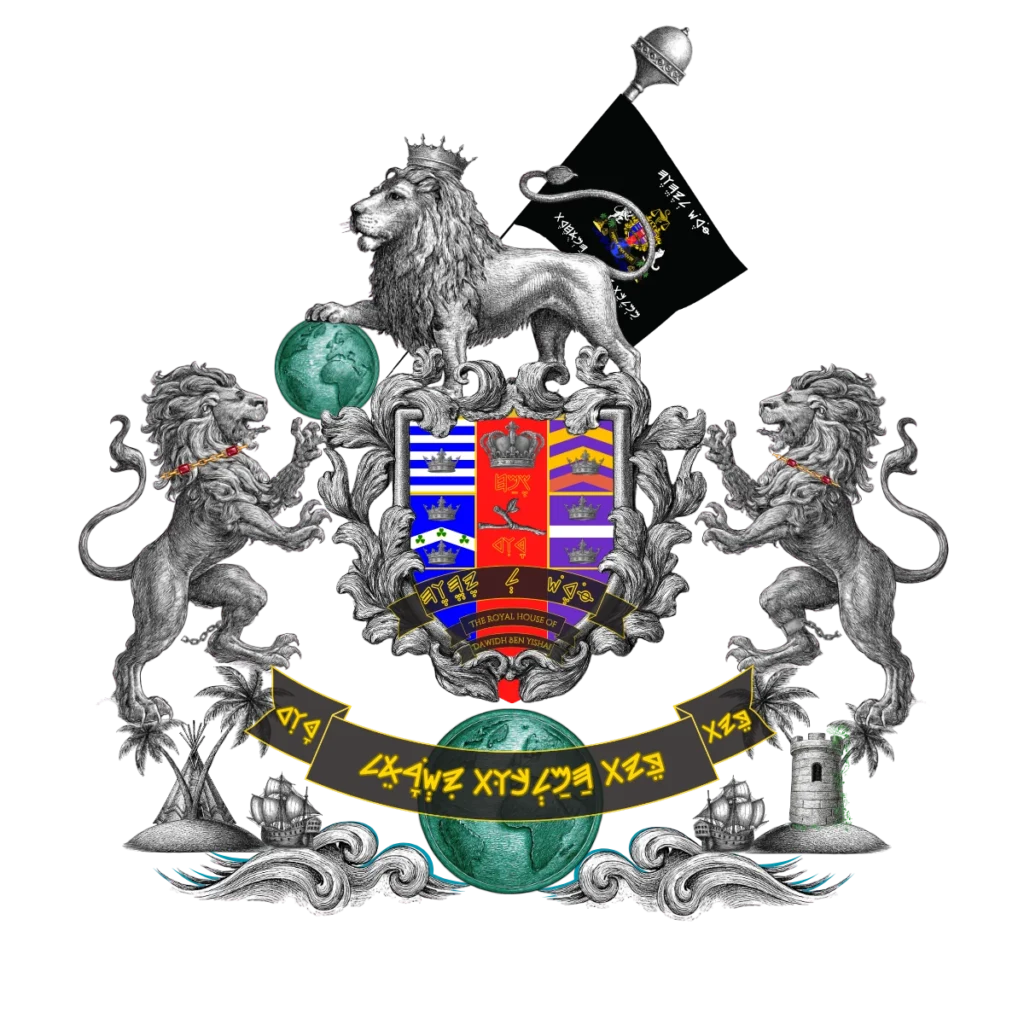

Sovereign Office
His Royal Majesty KingYehudhah Eyl Qannah Yisra’eyl
Melekh, מֶלֶךְ | HaMelekh, הַמֶּלֶךְ
The United Monarchy of Yisra’eyl honors His Royal Majesty King Yehudhah Eyl Qannah Yisra’eyl, HaMelekh, as the sovereign public head of the Kingdom, the chief executive authority of the Monarchy, and the visible bearer of royal command before the nations.
His Majesty’s public office concerns government, statecraft, command, justice, national continuity, and the ordered execution of the Kingdom’s institutions under the supremacy of Torah.
- Royal Dignity: King of the United Monarchy of Yisra’eyl
- Public Standing: Head of State and Government
- Governing Charge: Sovereign command, executive direction, justice, cabinet leadership, and national continuity
- Executive Order: Supreme public authority of the monarchy, governing in ordered unity with the Queen Regnant and the Executive Offices
The King
His Royal Majesty King Yehudhah Eyl Qannah Yisra’eyl is honored as HaMelekh, the sovereign public head of the United Monarchy of Yisra’eyl. His office is not merely ceremonial, symbolic, or historical. It is the living center of royal government, bearing responsibility for command, executive direction, public order, justice, and the continuity of the Kingdom before the nations.
The honor due to His Majesty is national and governmental. He stands before the people as the King entrusted with sovereign charge: to preserve order, to direct the executive life of the Monarchy, to maintain institutional coherence, and to ensure that government remains subject to the standard of Torah.
HaMelekh and Sovereign Command
The title HaMelekh, הַמֶּלֶךְ, identifies the King as the chief public authority of the Monarchy. In the restored order of Yisra’eyl, kingship is not decorative prestige. It is command joined to responsibility, dignity joined to discipline, and authority joined to obligation before יֶהֱוֶה.
His Majesty’s office gives visible form to the governing authority of the Kingdom. Through the King, the Monarchy is represented, directed, and held in order. The office carries the burden of final public responsibility where the stability, direction, and dignity of the Kingdom are concerned.
Head of State and Government
As Head of State and Government, His Majesty presides over the public authority of the Monarchy. His office concerns national direction, executive supervision, institutional order, high-level appointment authority, public representation, and the continuity of state administration.
This public role is not limited to proclamation. The King is responsible for the ordered execution of government. He receives counsel, weighs matters of state, directs executive priorities, and ensures that the institutions of the Kingdom remain aligned with their lawful purpose.
Executive Authority of the Monarchy
The King’s office stands at the center of executive government. The chambers, offices, and officers of the Monarchy do not exist as independent centers of rule. They serve within an ordered administration that receives direction, judgment, and final public authority through the Crown.
Executive authority requires discipline, records, counsel, and chain of command. His Majesty’s office provides the point of integration by which policy, administration, public communication, institutional development, and national priorities are brought into coherent order.
Royal Cabinet and Counsel
The Royal Cabinet exists to advise, report, coordinate, and assist the King’s executive command. Counsel is honored because wise government requires careful hearing, ordered deliberation, and disciplined review. Yet counsel does not replace sovereignty. It strengthens the King’s ability to govern with clarity, justice, and continuity.
Through Cabinet leadership, His Majesty receives the condition of the Kingdom’s offices, the status of public work, the needs of the people, the risks facing the administration, and the opportunities that require command-level attention.
Justice and Final Review
The public authority of the King includes the burden of justice. In matters that exceed ordinary resolution, or where the stability of the Kingdom requires final review, His Majesty’s office stands as a last point of public responsibility within the royal order.
This authority is not arbitrary. It is bound to Torah, counsel, records, due process, and the preservation of righteous order. The King’s final review function exists to protect the Kingdom from confusion, fragmentation, and failure of command.
Unity with the Queen Regnant
The Office of the King works in ordered unity with the Office of the Queen Regnant. His Majesty bears sovereign command as King; Her Royal Majesty Queen Regnant bears the highest queenly authority and executive office charge entrusted to her. Together, the public order of the Monarchy is strengthened by command, counsel, continuity, and administrative discipline.
This unity is not rivalry and not duplication. It is ordered monarchy: the King as sovereign public head, and the Queen Regnant as the supreme queenly executive authority appointed within the royal administration.
National Continuity
His Majesty bears responsibility for continuity across the public life of the Kingdom. Governments weaken when command is unclear, when offices drift from purpose, when law is separated from righteousness, or when public identity becomes confused. The King’s office exists to guard against that disorder.
Through His Majesty’s authority, the Kingdom is presented as a continuing government with memory, direction, law, rank, order, and purpose. This continuity gives the people a visible center of command and gives the nations a clear understanding of where the Monarchy stands.
Honor Before the Nations
The United Monarchy of Yisra’eyl presents His Royal Majesty King Yehudhah Eyl Qannah Yisra’eyl with the honor due to HaMelekh: King, Head of State and Government, chief executive authority of the Monarchy, guardian of public order, and sovereign representative of the Kingdom before the nations.
To honor His Majesty rightly is to honor the order of the Monarchy itself. His office reveals kingship not as empty title, but as command, responsibility, judgment, continuity, and service to the Kingdom under the authority of יֶהֱוֶה.
Constitutional Foundation
The governing protocols establish the King as head of state and government, the public executive authority of the Monarchy, the leading office of the Executive House, the recipient of Cabinet counsel, and the final review authority in matters requiring sovereign judgment. This profile presents those foundations in a public form suited to the dignity of His Majesty and the respect due to the office of the King.